

Contact centers in Mexico provide a nearshore advantage by combining lower operational costs, bilingual talent, and real-time collaboration with U.S. companies due to geographic and time zone alignment.
What Defines a Contact Center in Mexico?
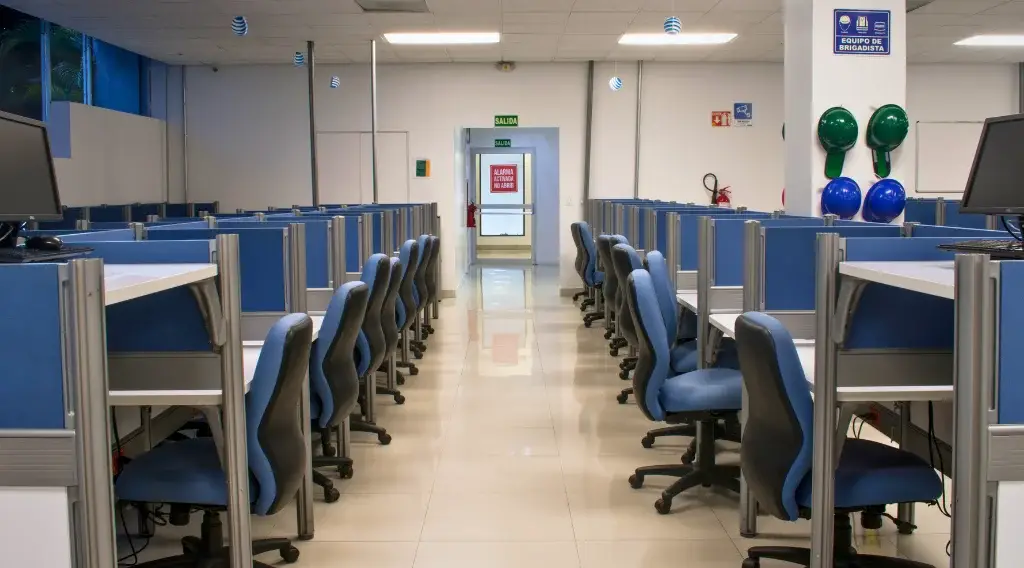
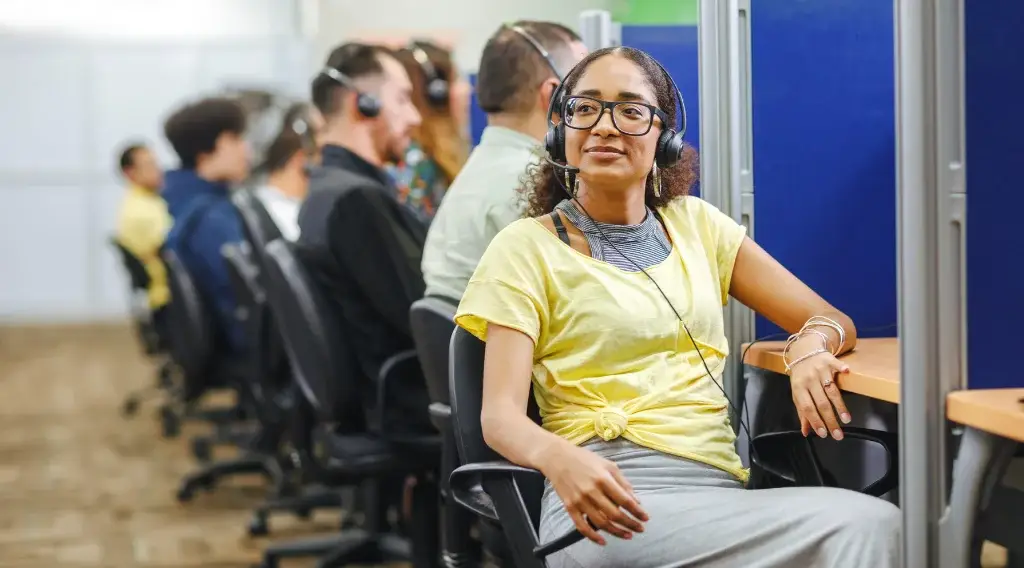
A contact center in Mexico is an operational model where companies manage customer interactions—such as support, sales, or technical assistance—through teams located within the country, typically serving U.S. and Canadian markets.
These operations can be structured in different ways through specialized providers, but they share common characteristics shaped by Mexico’s nearshore position.
Core defining elements include:
Customer interaction focus
Contact centers handle high-volume communication across channels such as phone, email, chat, and social media.
Bilingual service capability
Many contact centers in Mexico operate in both English and Spanish, enabling support for North American customer bases.
Time zone alignment with the U.S.
Geographic proximity allows real-time communication and operational overlap with U.S. business hours.
Process-driven operations
Activities are structured around defined workflows, scripts, and performance metrics such as response time, resolution rate, and customer satisfaction.
Key Insight
Contact centers in Mexico are not defined solely by location, but by their ability to combine language capability, operational scale, and real-time alignment with North American markets, making them a core component of nearshore service delivery.
Why Mexico Has Become a Nearshore Contact Center Hub
Mexico has emerged as a leading destination for nearshore contact center operations due to a combination of geographic, economic, and workforce factors that align with the needs of North American companies.
1. Geographic Proximity and Time Zone Alignment
Mexico shares multiple time zones with the United States, allowing operations to function in real time without delays or overnight shifts.
This enables:
- Immediate response to customer inquiries
- Easier coordination between U.S.-based management and Mexico-based teams
- Greater operational continuity across business hours
2. Bilingual Talent Availability
Mexico has a large and growing workforce capable of supporting both English and Spanish-speaking customers.
This is particularly relevant for:
- U.S. companies serving Hispanic markets
- Multilingual customer support operations
- Companies requiring culturally aligned communication
3. Competitive Cost Structure
Labor costs in Mexico are typically lower than in the United States, while maintaining service quality across many customer-facing roles.
This allows companies to:
- Scale support operations without proportional cost increases
- Allocate resources to higher-value functions
- Maintain service levels while optimizing operational budgets
4. Cross-Border Economic Integration
Mexico and the United States maintain one of the most integrated trade relationships globally, supported by agreements such as USMCA.
This integration facilitates:
- Stable business environments for cross-border operations
- Regulatory alignment in many sectors
- Strong supply chain and service connectivity
5. Accessibility and Operational Oversight
Mexico’s proximity allows for frequent and practical in-person interaction between U.S. companies and their contact center operations.
In many cases:
- Major cities are accessible within a few hours by air
- Same-day travel is feasible for operational oversight
- On-site management and training can be conducted without complex logistics
The positioning of Mexico as a nearshore hub is part of a broader industry evolution. As customer service operations shifted from centralized phone systems to global, technology-enabled networks, companies began reevaluating how location impacts service quality, cost, and scalability.
To understand how contact centers evolved from voice-based systems to modern, nearshore and AI-enabled operations, explore this detailed breakdown of the industry’s transformation.
FAQ
Why do U.S. companies choose Mexico for contact center operations?
Companies choose Mexico due to its geographic proximity, time zone alignment, and availability of bilingual talent. These factors enable real-time collaboration and improve communication quality compared to more distant offshore locations.
Are contact centers in Mexico only used for customer support?
No. While customer support is a primary function, contact centers in Mexico also handle sales, technical support, lead generation, appointment setting, and back-office coordination across multiple industries.
What industries commonly use contact centers in Mexico?
Contact centers in Mexico are widely used in industries such as healthcare, finance, telecommunications, e-commerce, and technology, where high-volume customer interaction and real-time support are critical.
What is the main advantage of nearshore contact centers compared to offshore models?
The primary advantage is operational alignment. Nearshore contact centers in Mexico allow companies to work in the same or similar time zones, improving communication, oversight, and customer experience compared to offshore models with larger time differences.