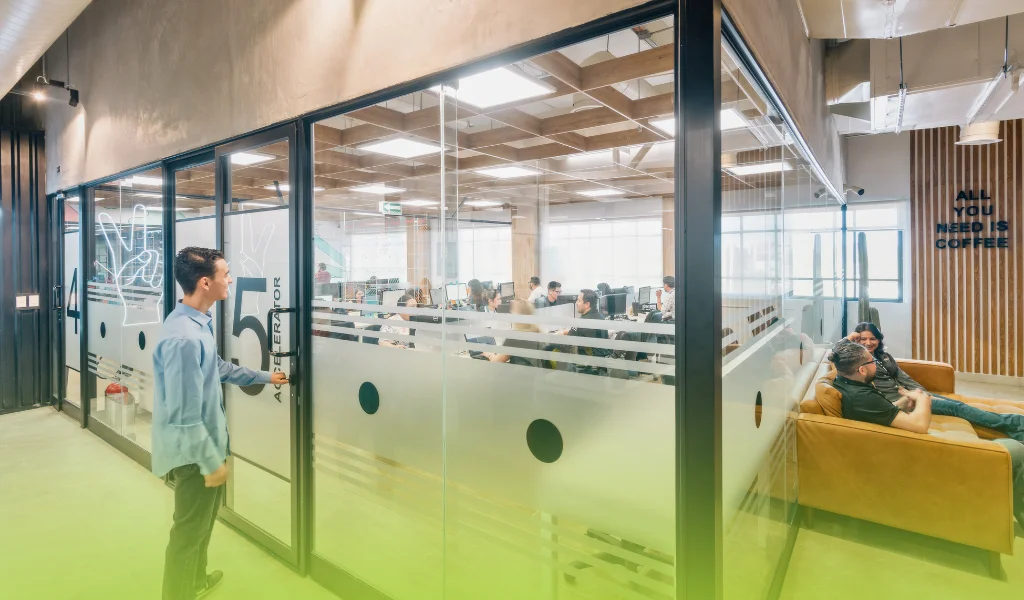



Attracting and retaining software development teams no longer depends on salary alone. While compensation remains the strongest single factor in job decisions, research consistently shows that workplace design and daily work conditions play a significant role in job satisfaction and performance.
According to The Impact of Office Design on Business Performance by the British Council for Offices, the workplace itself accounts for 24% of overall job satisfaction. The same research found that office design can influence individual performance by up to 5% and team performance by up to 11%, largely due to improved interaction and collaboration. For software development teams—whose work depends heavily on focus, communication, and shared problem-solving—these effects are especially relevant.
Recent data from the 2024 Stack Overflow Developer Survey shows that hybrid and in-person work arrangements continue to be important among developers:
- 42% of developers work in a hybrid model
- 38% work fully remote
- 20% work fully in-person
This distribution suggests that in-person and hybrid engagements remain strong preferences among the developer community, making physical workplace design relevant even in markets with high remote participation.
Why Comfortable and Flexible Workspaces Matter for Software Development Teams
Making an office “comfortable” goes beyond ergonomic chairs and nice décor. It’s about reducing stress and creating an environment where people can do their best work. Every element – lighting, noise levels, layout – should work together to support your developers’ well-being. When people feel at ease and focused in their workspace, they’re not only happier, they’re also less likely to leave for another job.
Globally, many technology companies have tried to emulate the playful office trends made famous in Silicon Valley – think of quirky offices with ping-pong tables, video game lounges, or slides in the lobby. Those perks can be fun morale boosters, but companies often miss more important aspects of workspace design. For instance, installing a foosball or video game station in the break room is nice, but failing to provide adequate collaborative space is a critical mistake. The core needs of software development teams – room to collaborate, to concentrate, and to feel valued – must take priority over superficial perks. The bottom line: a modern workspace design that promotes collaboration, comfort, and creativity will keep your developers far more engaged than one that’s just packed with gimmicks.
Meeting the Needs of Software Development Teams
To attract and retain top software talent, take a strategic approach to your office design. First, be sure it aligns with your corporate culture and brand identity. Once you have established your company’s culture, reflect it in the physical workspace. This reassures employees that they work for a unique organization that genuinely values them and what they do. A generic cubicle farm won’t inspire anyone – your team’s surroundings should remind them of your mission and values every day.
Identity in the office isn’t just about slapping a huge logo on the wall. There are many subtle design choices that can reinforce who you are as a company. For example:
- Incorporate company colors and themes into the office décor – from wall paint to furniture accents – to create a cohesive brand atmosphere.
- Display motivating messages and company values where people can see them. This might include inspirational quotes, posters of company milestones, or TV screens showcasing team achievements and goals.
- Use creative visuals (murals, wall art, or even graffiti-style art in common areas) to communicate the company’s story and ambitions. These touches present your company as an ambitious, engaging place to work, which in turn inspires employees to strive for those big targets.
Remember, your software development teams likely have recruiters constantly pitching them other roles – but a developer who walks into an office that energizes and inspires them will think twice before jumping ship. In fact, one survey found 83% of professionals say the features of their office can keep them at a company. That’s the power of intelligent workspace design in meeting employees’ needs.
The Role of Clear Policies
Workspace design alone does not improve productivity unless software development teams operate within clear performance expectations. Defined goals, transparent metrics, and shared guidelines ensure that flexibility and amenities support productivity rather than disrupt it. When expectations are clear, teams can benefit from modern workspaces without sacrificing delivery or focus.