
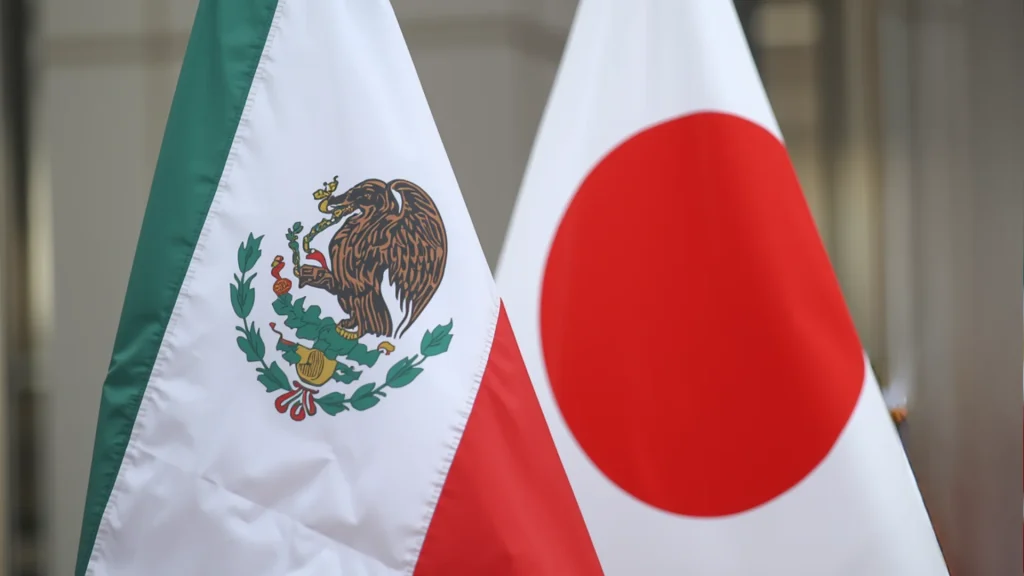
Current Overview of Mexico–Japan Relations
The relationship between Mexico and Japan combines more than 130 years of formal diplomacy with over four centuries of historical exchange. Today, this partnership is defined by three structural dynamics:
- Industrial integration in central Mexico (Bajío region)
- Expansion of agri-food exports
- Collaboration in high-value technology sectors
A key turning point was the Mexico–Japan Economic Partnership Agreement (2004), which significantly accelerated Japanese investment flows into Mexico.
Key Data: Growth of Japanese Investment
- The number of Japanese companies in Mexico has grown fivefold since 2004
- Approximately 5,000 Japanese nationals reside in the Bajío region, closely linked to industrial operations
- In Jalisco alone, there are 76 Japanese companies established, mainly in automotive, food processing, and water treatment
Strategic Sectors Driving Bilateral Cooperation
1. Automotive and Advanced Manufacturing
Japanese firms play a central role in Mexico’s automotive ecosystem, particularly in the Bajío region. Ongoing plant expansions reinforce integrated North American supply chains.
2. Agri-Food Trade
Japan remains one of the world’s largest food importers, accounting for 3.7% of global agri-food imports in 2020.
Mexico has capitalized on this demand:
- Agri-food exports to Japan exceeded $1.04 billion USD
- Key exports include avocado, meat, seafood, and tequila
Japan is currently the second most profitable agri-food export market for Mexico.
3. Semiconductors and High-Tech Industries
Recent bilateral discussions have prioritized semiconductor development, reflecting:
- Global supply chain restructuring
- Increased demand in automotive and electronics industries
Key Drivers Behind the 2026 Strengthening
- Nearshoring trends: Japanese firms seek proximity to U.S. markets
- Trade stability: Mexico’s network of international agreements
- Specialized talent development: Collaboration with universities and research centers
- Global events: The 2026 FIFA World Cup boosting tourism and visibility
- Active diplomatic engagement: Consulates and bilateral initiatives
- Mexico–Japan relations are transitioning from trade-focused to multi-sector strategic cooperation
- Investment growth is concentrated in manufacturing and high-tech industries
- Agri-food exports remain a high-value component of bilateral trade
- Talent development and innovation are emerging as central pillars